
Dating App Phone Number Search
Cross-reference phone numbers from Tinder, Bumble, Hinge, or online dating matches against telecom routing, virtual VoIP burner lines, public footprints, and romance scam risk signals before investing trust, emotions, or money.
Every search initiates with a Free Telecom Check that validates number formatting, country allocation, carrier name, line type (mobile vs. virtual VoIP), and regional rate center. Deeper open-source intelligence—including connected usernames, public profile links, and historical breach exposures—can be unlocked with standard or premium report credits.
Find Dating Profiles by Phone Number: What Telecom & OSINT Data Realistically Reveals
Most people search a phone number expecting a secret search bar that instantly pulls up a live dating profile. Understanding the technical architecture of dating platforms and telecom networks prevents false expectations and helps you spot genuine warning signs.
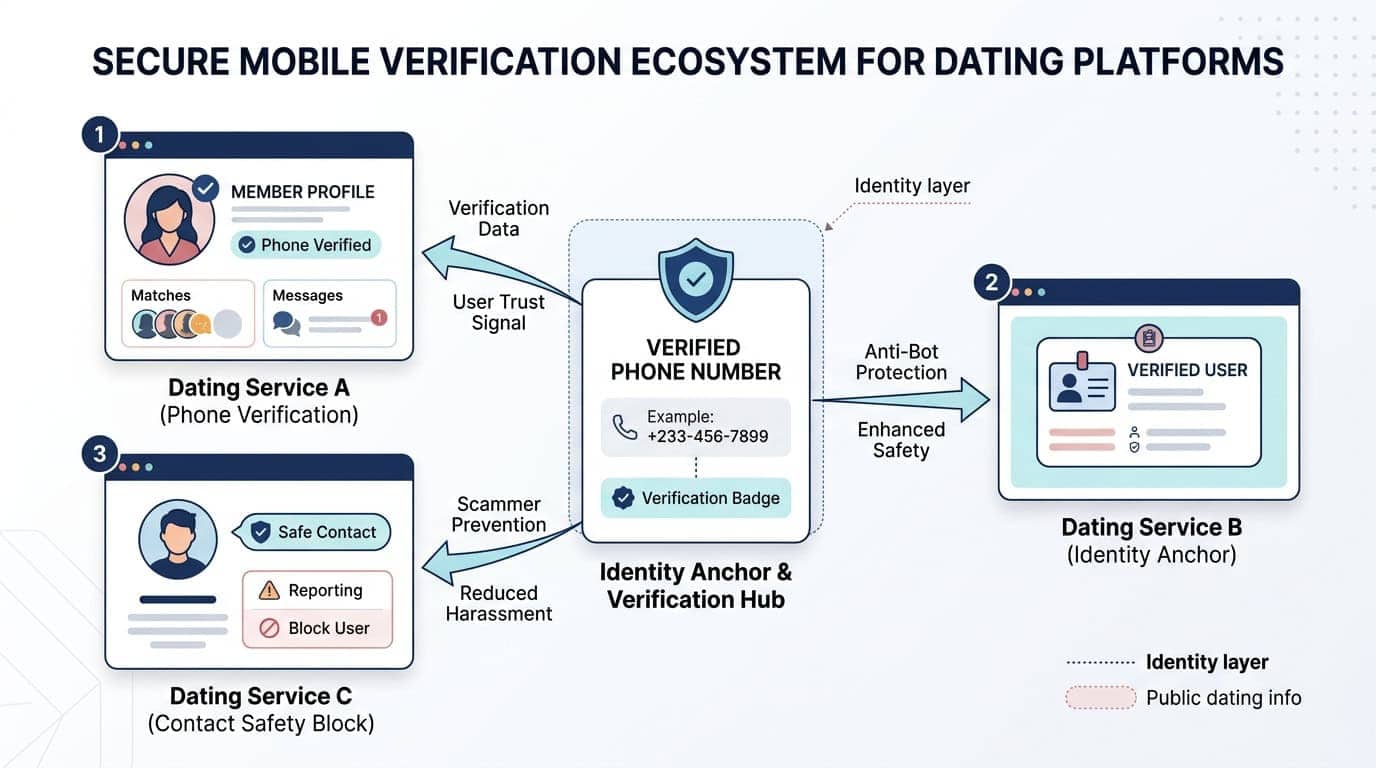
The Phone Number as an Identity Anchor
Dating applications intentionally do not publish open directories indexed by phone number. Platforms such as Tinder, Bumble, and Hinge require mobile phone verification during account registration strictly as a security boundary: it deters automated spam bots, enables two-factor authentication, and facilitates contact-blocking features.
Because the phone number serves as a foundational account credential, it functions as a reliable identity anchor across the broader web. People frequently reuse their mobile number or its associated usernames and emails across messaging apps, social networks, and online platforms. When you investigate a phone number, you are uncovering this broader digital footprint rather than breaching private application databases.
CatfishNumber Evidence Taxonomy
To prevent misleading assumptions, CatfishNumber classifies every search finding into explicit evidence categories:
- Verified Telecom Data Direct carrier network, active line type (Mobile, Landline, VoIP), country prefix, and regional rate center.
- Public Profile Reference Openly indexed web pages, professional profiles, or classified postings that associate the number with an identity.
- Username Correlation Identical or correlated screen names and aliases discovered across public messaging and online platforms.
- Historical Account Signal Past breach data or historical registration records. This proves historical association, NOT current active use.
- Reputation & Risk Flag Reports of robocall spam, telemarketing abuse, or reported romance scam patterns from aggregated feeds.
How a Dating App Phone Number Search Works
From the moment an online dating match gives you their digits to the final report, our system processes the number through three progressive intelligence stages.
Enter the Phone Number from Your Dating Match
When a conversation moves from an app like Tinder, Bumble, or Hinge to direct text messaging, WhatsApp, or Telegram, enter the provided phone number into CatfishNumber. Our system normalizes the input into international E.164 format and resolves the country code automatically.
- International numbering plan (ITU-T) verification
- Country prefix allocation and validity check
- Zero exposure: target is never alerted or contacted
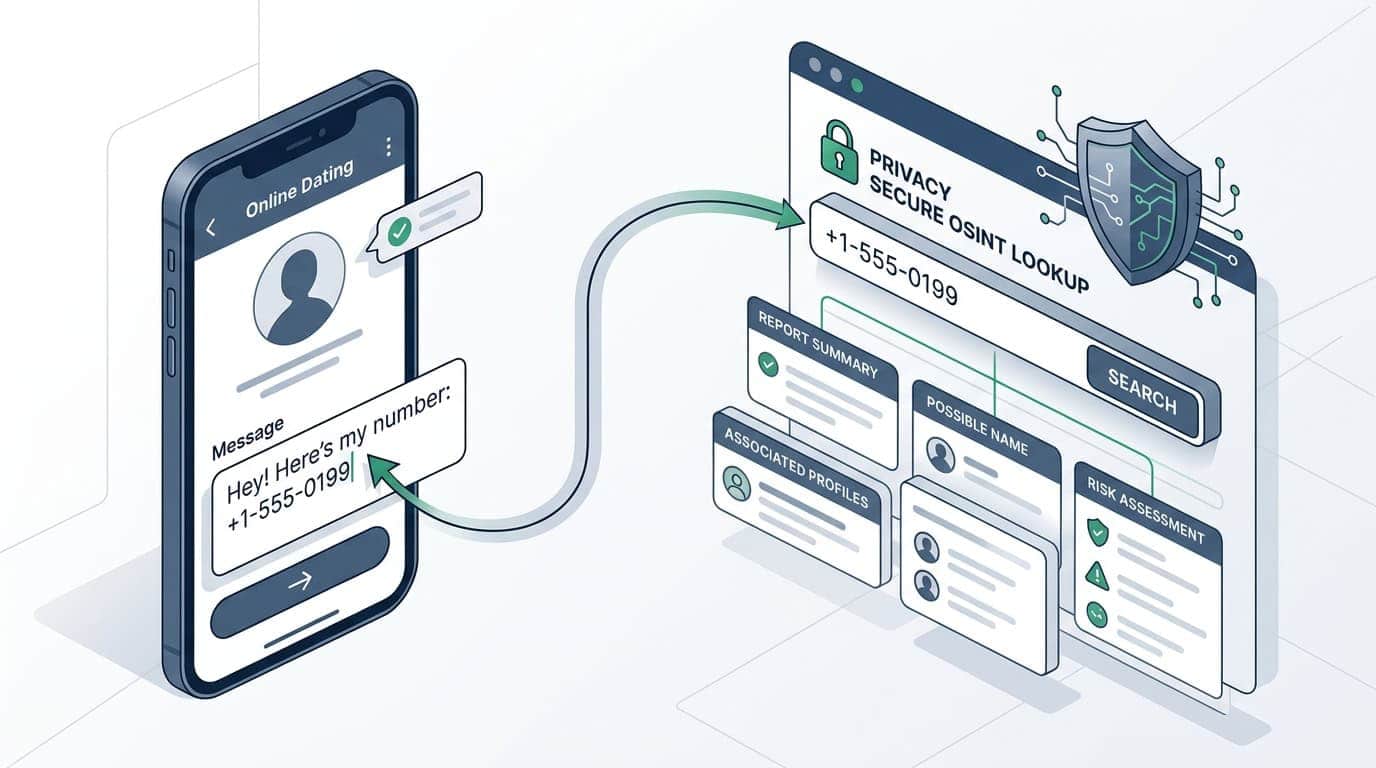
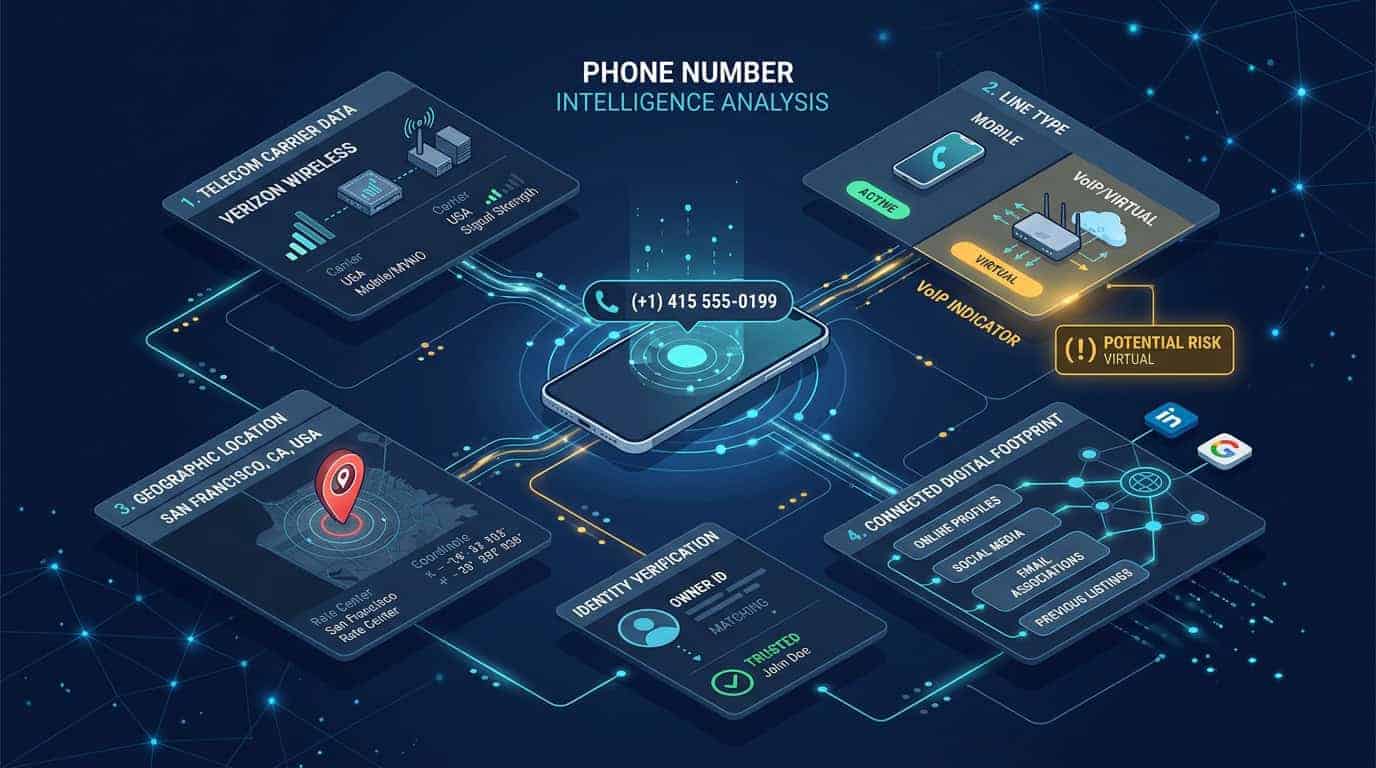
Check Telecom Routing, Carrier & Virtual Line Signals
The system immediately performs a live telecom network interrogation via carrier databases. It determines whether the number belongs to a major mobile network operator (such as AT&T, Verizon, T-Mobile, Vodafone, or O2) or if it is routed through an unverified Voice over IP (VoIP) provider.
- Line classification: Mobile, Landline, or Non-Fixed VoIP
- Virtual burner app detection (Google Voice, TextNow, Skype)
- Geographic rate center origin vs. claimed match location
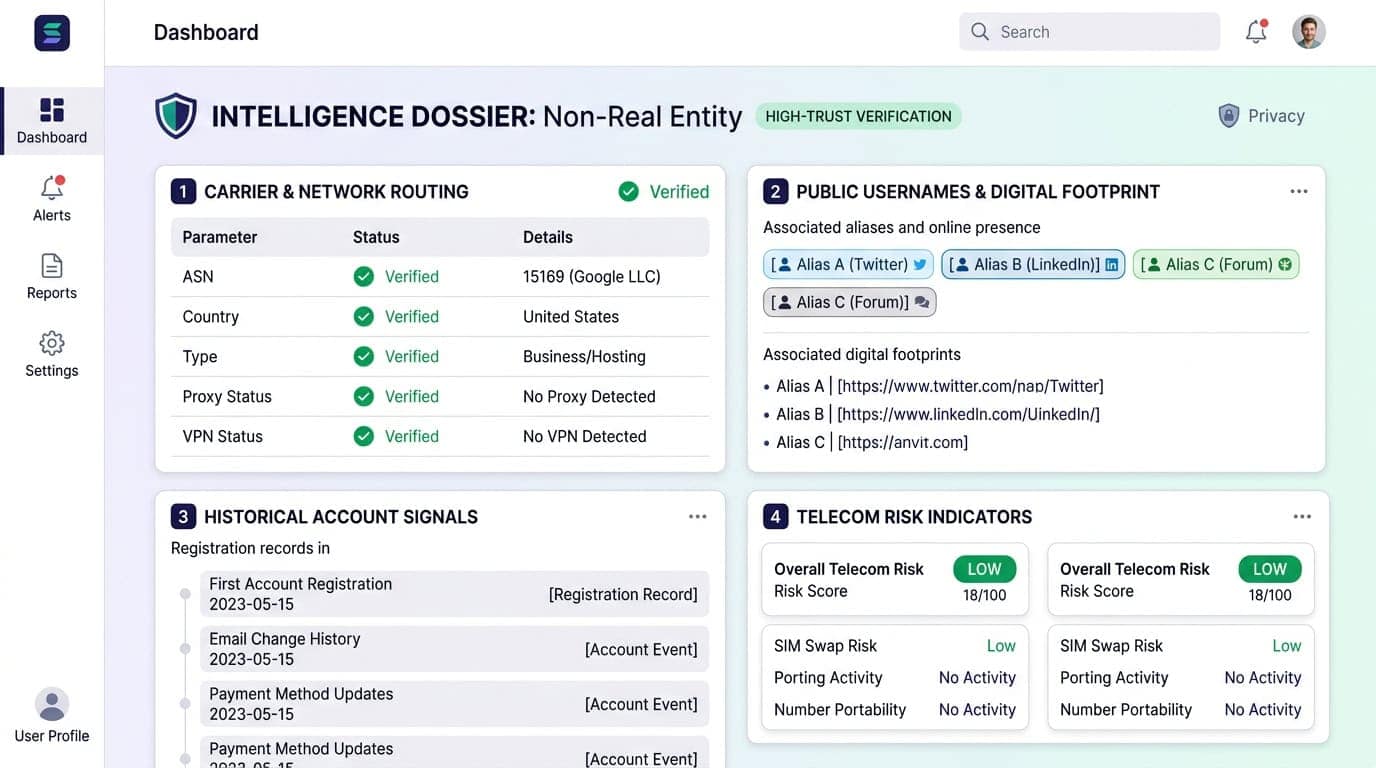
Review Public Footprint, Linked Usernames & Risk Clues
With standard or premium search authorization, CatfishNumber queries open-source intelligence repositories, public directories, and historical breach records. The compiled report presents linked aliases, online accounts, and reputation warnings without fabricated certainty.
- Discovered public usernames and messaging handles
- Historical account registration signals and data breaches
- Aggregated spam complaints and romance scam warning flags
Can You Find Someone’s Profile on Tinder, Bumble, or Hinge by Phone Number?
Can you actually look up someone’s active dating profile using only a telephone number? Here is how each major platform architectures its user privacy, what telecom telemetry can verify, and where direct lookup claims fail.
Tinder: Why Direct Phone Searches Don’t Exist & What Carrier Data Can Uncover
Official Platform Reality: Tinder explicitly confirms in its Help Center that users cannot search for specific individuals by phone number, name, or email. The app discovery system is entirely randomized and location-based. Tinder uses phone numbers solely for account login, SMS 2FA, and the Block Contacts safety feature.
What CatfishNumber Can Check: We verify whether the phone number is an authentic mobile line capable of receiving standard SMS short codes, identify the real carrier, and cross-reference open-web footprints for public usernames or historical accounts associated with that number.
What It Does NOT Prove: A historical record does NOT prove that a Tinder account is currently active, nor does it reveal private swipe activity, match lists, or conversation logs.
Bumble: Spotting Burner Numbers & Location Mismatches from Matches
Official Platform Reality: Bumble does not maintain a public user directory. Account creation requires mobile verification or third-party authentication, and Bumble treats phone numbers as strictly confidential personal data. No legitimate service has direct API access to query Bumble user accounts by phone number.
What CatfishNumber Can Check: When a Bumble match offers their number, CatfishNumber checks if the carrier and geographic exchange match their claimed residence, detects whether they are hiding behind a temporary burner app, and searches for linked public social profiles.
What It Does NOT Prove: We do not bypass Bumble privacy settings, hack passwords, or determine whether someone has “Snooze Mode” enabled.
Hinge: Cross-Referencing Identity Anchors Behind “Designed to Be Deleted” Profiles
Official Platform Reality: Hinge positions itself as “designed to be deleted” and requires mobile phone verification upon registration. Hinge uses phone numbers to enforce member bans and manage user Block Lists. There is no in-app search field to find members by telephone number.
What CatfishNumber Can Check: We evaluate the phone number as an identity anchor to establish who the number is registered to, uncover linked usernames across other platforms, and check if the number has been flagged in fraud or romance scam databases.
What It Does NOT Prove: An unlisted number or absence of public records does not prove someone is not on Hinge; they may have registered with an unindexed secondary line.
Spotting Online Dating Red Flags: How Telephony Data Catches Scammers Early
You matched with someone online, conversation flowed smoothly, and they shared a phone number. But something feels slightly off. How can telecom data help protect you?
Dating scammers rarely use their own primary, contract-bound mobile SIM cards. Instead, they rely on virtual numbers, spoofed Caller ID, or throwaway accounts. CatfishNumber helps you evaluate objective technical telephony indicators against the story your match is presenting:
- VoIP Virtual Line Alerts: Uncovers whether a number is hosted on services like Google Voice, TextNow, Twilio, or Bandwidth.com rather than a physical mobile carrier.
- Country & Exchange Mismatches: Detects if someone claiming to live in London or New York is using a number originating from a completely different state, country, or offshore routing hub.
- Aggregated Spam & Fraud Reports: Scans telecommunication complaint feeds to identify numbers repeatedly reported for unsolicited harassment, robocall fraud, or dating scams.
- Conflicting Identity Signals: Highlights when public records associate the number with an identity that contradicts the name, age, or background presented on their profile.
Important: No individual technical indicator proves malicious intent. Many privacy-conscious people legitimately use VoIP services. The goal is to identify discrepancies that warrant healthy caution before meeting in person.