
The NumLookup number lookup tool mainly works for U.S. callers, so the results are often surface-level or outdated: a carrier, maybe a past owner, an approximate location if you’re lucky.
These 6 reverse number search alternatives might help you identify callers – they have better coverage, fresher data, and crucial context.
| Tools | Data Depth | Use Cases |
| CatfishNumber | 5/5 (carrier, VoIP, scam signals, social traces, images) | Scam detection, identity checks, and dating verification |
| Truecaller | 3/5 (reputation, spam data, community labels) | Caller ID, spam blocking, everyday use |
| WhosCall | 3/5 (risk labels, scam patterns, tags) | Scam prevention, real-time call filtering |
| Sync.ME | 3/5 (profiles, photos, social data) | Identity lookup, profile matching |
| Twilio Lookup | 4/5 (carrier, line type, risk signals, real-time telecom data) | Fraud detection, onboarding, and validation |
| Trestle | 4/5 (names, demographics, addresses, enrichment data) | CRM enrichment, lead validation, fraud analysis |
1. CatfishNumber: Best for Caller ID and Detecting Scams
CatfishNumber is a phone number lookup tool that gathers live data from public sources (not just names!). CatfishNumber earns its spot as a top NumLookup alternative because it finds multiple caller details:
- Carrier data
- VoIP flags
- Scam reports
- Social media, dating profiles, messaging apps, and bios
- Profile images
CatfishNumber works for global numbers as well, and puts the findings into a neat report, so you can understand and act on results regardless of region.
And it doesn’t stop there. CatfishNumber flags Google Voice, TextNow, or Twilio numbers, which are often used in scams – something NumLookup can’t do.
CatfishNumber affordably shows where the number appears online: the pricing is pay-per-lookup (you can pay $6.95 for 2 number lookups, or $11.95 for 7 credits).
CatfishNumber provides far more context than NumLookup ever could.
2. Truecaller: Best at Real-Time Spam Prevention
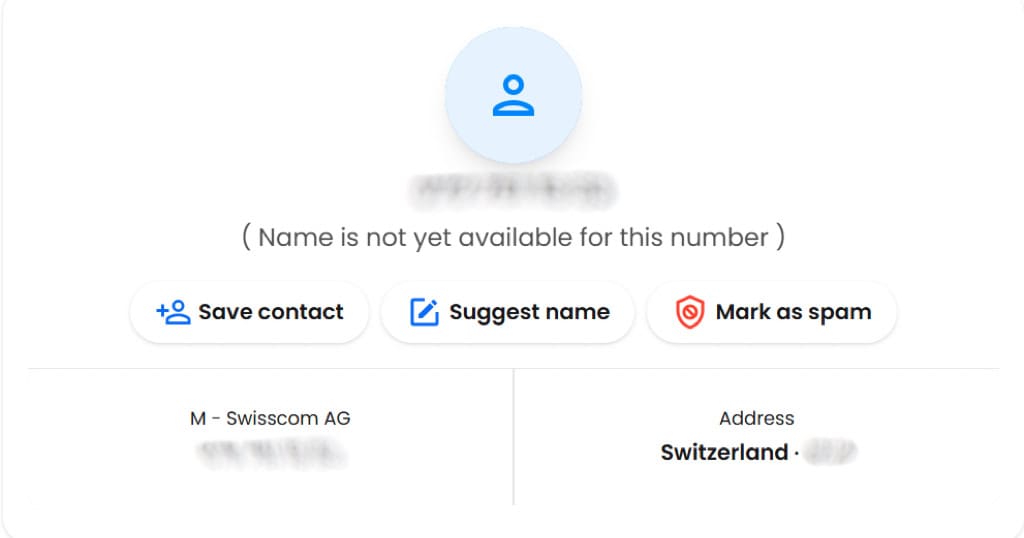
Truecaller is basically a live detection system for phone numbers, not just a reverse number search engine.
On top of a name, you also get: location, line type, spam risk, usage patterns, and community labels (whether a number belongs to a business or a scammer).
Truecaller stands out as a NumLookup alternative because it’s global, has real-time caller ID, and has automatic spam blocking, handling calls as they come in.
Just keep in mind: Truecaller works best as an app, and the site has limited phone-lookup functions. Also, the results rely on user-shared data…including your data.
As for pricing, you can stick with the free, ad-supported version of Truecaller or upgrade to one of the paid plans:
- $74.99/yr
- $99.99/yr
- $249/yr
(Prices may be subject to change.)
3. WhosCall: Best for Assessing a Number’s Risk Score
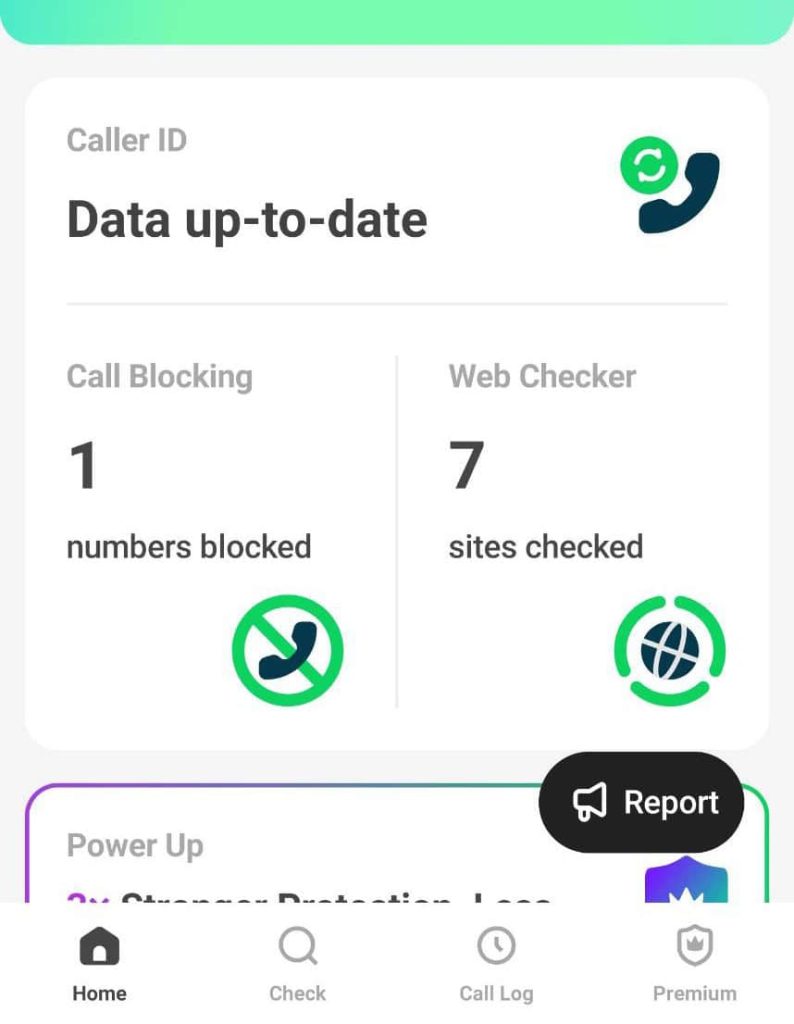
WhosCall is a scam filter service that decides if an unknown caller is risky. It prioritizes safety, whereas NumLookup focuses on basic number info.
WhosCall combines real-time caller ID, spam blocking, a web checker, and the ability to scan links, messages, and screenshots.
Beyond names, WhosCall adds risk warnings, business tags, and community labels, so you can instantly tell if the number belongs to a legit service.
WhosCall is constantly refreshed by user reports and scam patterns, avoiding outdated data. In some regions, it supports offline caller ID without a signal.
It works best in East and Southeast Asia, though it works globally, with the depth depending on the region. Plans vary based on solo or shared use (2–5 users):
- Monthly: $2.89, $8.69, or $4.59
- Yearly: $27.00, $83.00, or $44.00
4. Sync.ME: Best for Matching Numbers to Identities
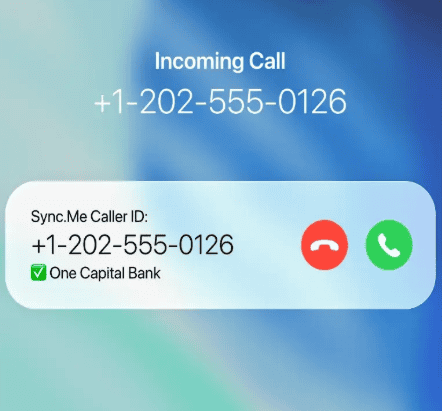
Sync.ME is a caller ID tool that identifies phone numbers by matching them with profile photos, names, and social data. It’s useful for catching catfishes!
It basically expands a number into a searchable identity using global databases and community-driven updates.
The results are more updated than NumLookup’s since Sync.ME continuously syncs new info across 190+ countries. In return, users get a full profile view built from multiple sources.
The report can include photos, social signals, and past number owners.
It’s primarily built for mobile because its syncing system is most effective. Some results look promising until you sign up, only to find limited data behind them.
You could get a few free searches upfront, but most features sit behind subscriptions:
- Premium: $2 – $20
- Pro: $5 – $40
- Unlimited: $50
(Sync.ME’s prices aren’t public. These pricing plans come from the App Store.)
5. Twilio Lookup: Best for Determining Number Types
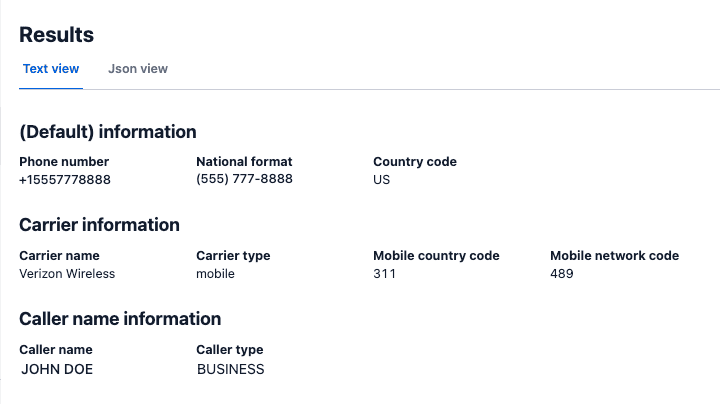
Twilio Lookup is a telecom data API that checks numbers directly against carrier networks, skipping profiles and going straight to the source.
While NumLookup’s results are static, Twilio collects real-time data. The results are queried live, not taken from old databases:
- Line type
- Carrier
- Country
- Reachability
- SIM swap status, reassigned numbers, and identity match
Twilio’s SIM swap alerts and reassigned number info reveal recent ownership changes, which are critical for fraud detection, onboarding, and account security.
Twilio’s identity verification feature is limited because it works mostly in the U.S., with no social context to fill in the gaps.
Since Twilio is an API-based tool, it’s less practical than NumLookup. It’s mostly built for businesses and developers to find precise real-time telecom data.
As for Twilio’s prices, basic checks are free, while most lookups range from $0.01 to $0.10 per request, and can drop to around $0.0015 at scale.
6. Trestle: Best for Matching Social Profiles to Numbers
Trestle is a background check tool for phone numbers, except it’s built to run near-instantly and at high volume.
Trestle finds names, demographics, addresses, emails, and detailed phone metadata across 100+ countries, so it’s accurate at identifying number owners.
The reports are layered; Trestle connects multiple data points into something usable for CRM enrichment, lead validation, or fraud analysis.
This reverse number lookup tool is a strong NumLookup alternative, but it gathers data from aggregated sources, not direct carriers.
Trestle is fast, and its data is refreshed, but like most tools at this level, it’s built for APIs and scale, not casual lookups. Pricing is credit-based:
- Basic checks: $0.015 – $0.03
- Enrichment & caller data: $0.07
- Add-ons: +$0.005
Your Number Lookup Results Came Up Empty? Here’s What to Do:
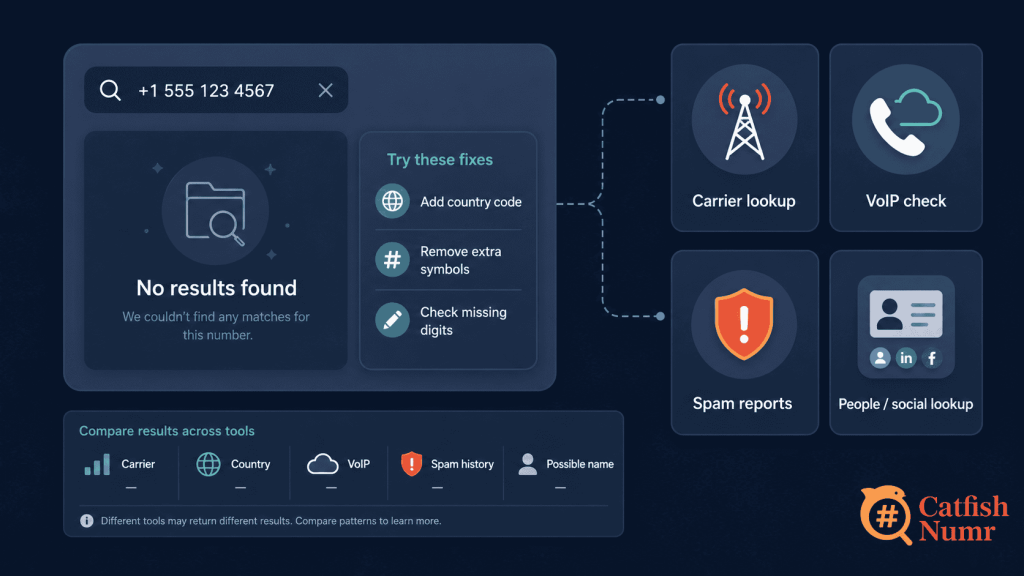
If your reverse number search results are coming up empty, it usually means the number is new, recycled, spoofed, or tied to a VoIP service. Check the number:
- Add the correct country code.
- Remove extra spaces, symbols, or brackets.
- Make sure there are no missing digits or typos.
Then, choose the right NumLookup alternative based on the type of data you need. Here’s my formula. 👇
I first use a carrier lookup tool like CatfishNumber or Twilio to reveal a number’s line type, network, and carrier details.
For checking VoIP status, I turn to number lookup tools like CatfishNumber (you can use it for burner, app-based, or virtual numbers).
The Truecaller and WhosCall tools focus on spam, so I use them to view scam reports, robocall history, and caller complaints.
As for people searching and social media lookups, Sync.ME and Trestle are my favorites because they can find names, socials, addresses, or public records tied to numbers.
Try different number lookup engines if needed! Compare the results, and look for recurring patterns like carrier, country, VoIP flag, spam history, or possible name.
Leave a Reply